
Commercial Business Signs only work when people can read them fast, from the right distance, in any lighting. Therefore, choosing the right LED lighting is not a minor detail. It is a core part of visibility, brand impact, and long-term cost control.
In this guide, you will learn how to select LED lighting for business signage based on brightness, color temperature, durability, local codes, and maintenance. If you are researching outdoor signage in North Texas, you can also see how a local sign company Fort Worth businesses trust approaches lighting decisions in real projects.
Why LED lighting matters for commercial business signs
A great design cannot overcome poor lighting. However, many owners finalize illumination at the last minute. That usually leads to glare, dim letters, or uneven lighting that hurts readability.
Effective LED sign lighting should:
- Keep signage readable from the street, sidewalk, or parking lot
- Balance brightness with nearby ambient light
- Hold consistent color and intensity over time
- Reduce energy use without sacrificing visibility
- Meet local signage and lighting ordinances
When lighting is planned early, Commercial Business Signs look cleaner, perform better at night, and need fewer service calls.
Understanding LED lighting basics for business signage
LEDs have replaced neon and fluorescent in many illuminated signs because they last longer and use less power. Additionally, LED modules can be placed precisely to light channel letters, cabinets, and halos evenly.
What makes LED different from neon and fluorescent
Older systems often waste energy as heat and require more frequent replacement. In contrast, LED sign modules deliver efficient, targeted light. This choice of lighting typically means:
- Lower electricity use for similar brightness
- Less heat inside the sign cabinet or letters
- Better control of light spread and coverage
- More consistent performance over years of use
Common LED applications in commercial signs
LED lighting is used in many types of business signs, including:
- Channel letter signs (internally illuminated)
- Halo-lit and backlit signage
- Illuminated cabinet signs
- Monument signs and pylon signs
- Window graphics and interior displays
Because each format reflects and diffuses light differently, the best LED setup depends on size, mounting, and viewing distance.
Brightness and visibility: how much light does a sign need
Brightness is often misunderstood. More light is not always better. A sign that is too bright can wash out colors, create glare, and even violate city rules. On the other hand, lighting that is too dim makes Commercial Business Signs disappear at night or in bad weather.
Factors that determine the right brightness
- Viewing distance: Highway readability needs more output than a sidewalk sign.
- Ambient lighting: Bright retail corridors require stronger illumination to compete.
- Sign size: Larger faces need more even coverage to avoid dull areas.
- Color and materials: Dark faces absorb light and usually need higher output.
For this reason, a lighting plan should match the site conditions, not a generic template.
Color temperature: choosing the right LED tone for your brand
Color temperature changes how your sign feels and how legible it looks. Additionally, it affects whether whites appear clean or tinted, which can impact brand perception.
Common LED tones and best use cases
- Warm white: Inviting for restaurants, boutiques, and hospitality signage.
- Neutral white: A reliable choice for retail, offices, and professional services.
- Cool white: High-contrast visibility for attention-focused roadside locations.
Matching tone to branding keeps business signage looking intentional. Otherwise, a premium brand can look harsh, or a modern brand can look dated.
LED lighting for channel letters and sign cabinets
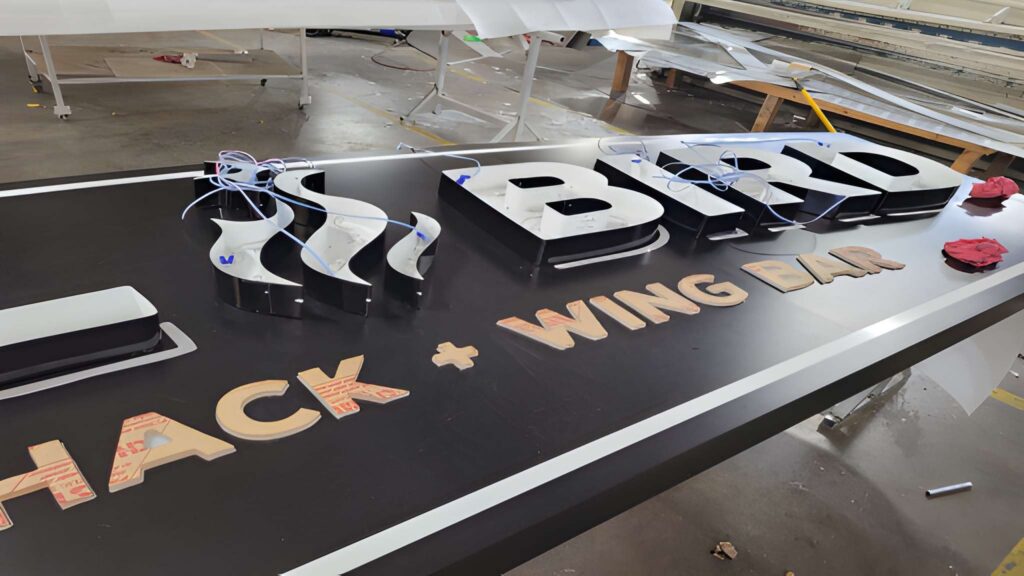
Channel letters are one of the most common illuminated sign types. The LED quality and layout inside each letter determines whether the final look is smooth or spotty.
What to look for in LED sign lighting quality
- Even illumination: No visible dots, streaks, or hot spots.
- Stable wiring: Reduces flicker and uneven brightness across letters.
- Outdoor-rated protection: Weather sealing helps prevent moisture damage.
- Correct spacing: Prevents dark pockets in larger letters and shapes.
Signs your LED modules are low quality
- Hot spots or “pixel” dotting on the face
- Color shifting over time (white turns yellow or bluish)
- Early failures shortly after installation
- Uneven brightness across the same word or logo
Higher-grade LEDs cost more up front. However, they usually reduce repairs and keep Commercial Business Signs looking consistent longer.
Energy savings and long-term performance
LED lighting is popular for one major reason: efficiency. If your sign runs nightly or 24/7, the savings can be meaningful over time.
How LEDs reduce operating costs
- Less energy use than neon or fluorescent for similar visibility
- Lower heat output, which protects internal sign components
- Long service life, which reduces replacement frequency
- Dimming options to adjust brightness by time of day
When businesses upgrade older illuminated signs, they often notice steadier performance and fewer flicker-related issues.
Durability and weather resistance for outdoor signs
Outdoor business signs face sun, storms, wind, and temperature swings. Therefore, LEDs and power supplies must be built for commercial environments, not general indoor use.
What affects LED durability outdoors
- UV resistance: Helps prevent yellowing and material breakdown.
- Moisture sealing: Protects wiring and modules from corrosion.
- Temperature tolerance: Supports stable output in heat and cold.
- Vibration resistance: Important for pylon and monument signs in wind.
Choosing outdoor-rated components protects Commercial Business Signs and helps avoid premature failures.
Local lighting ordinances and compliance
Many cities regulate illuminated signage. Additionally, requirements can change by zoning, roadway type, and proximity to residential areas.
Before installation, check for rules on:
- Maximum allowable brightness
- Hours of operation for illuminated signage
- Restrictions on flashing, animation, or color-changing LEDs
- Setback, height, and size requirements tied to lighting
Non-compliance can lead to fines or forced modifications. Working with an experienced provider helps reduce that risk.
Choosing the right sign and lighting setup by business type
Different locations require different visibility strategies. As a result, the same LED package will not perform equally in every setting.
Retail storefronts
Moderate brightness and neutral to warm tones tend to work well. Evenly lit channel letters often provide strong curb appeal.
Restaurants and hospitality
Warm lighting creates a welcoming feel. Moderate brightness also helps avoid overpowering patios or nearby neighborhoods.
Highway and high-traffic locations
Higher brightness and cooler tones can improve long-distance readability. These sites often need purpose-built, high-visibility lighting plans.
Industrial and office parks
Clarity and durability matter most. Neutral to cool white lighting can keep signage direct and easy to read.
Maintenance tips for illuminated commercial business signs
Even quality LED systems need upkeep. Simple maintenance protects brightness, safety, and the professional look of your signage.
Routine maintenance checklist
- Inspect for flickering, dimming, or uneven areas
- Clean sign faces to remove dirt that blocks light
- Check wiring for corrosion, especially in humid conditions
- Test transformers and power supplies annually
When it is time to upgrade your sign lighting
- Brightness has dropped noticeably
- Sections fail repeatedly, or parts are no longer available
- Your sign no longer meets updated safety or brightness codes
- The lighting no longer fits your current branding
Proactive service often extends the life of Commercial Business Signs and reduces full replacement costs.
Working with a professional sign company
Choosing LED lighting means balancing visibility, color accuracy, energy savings, durability, and code compliance. Therefore, many business owners benefit from a professional evaluation before fabrication or retrofit.
Elite Signs of Texas works with business owners, retailers, and property managers to design and install illuminated signage for specific sites and viewing conditions. As a local signage company serving Fort Worth, the team considers ambient lighting, distance, and ordinances before recommending LED options.
If you are considering new or upgraded business outdoor signs Fort Worth locations depend on, a local partner can help you avoid compliance issues and weather-related failures.
Conclusion
LED lighting for Commercial Business Signs is not about picking the brightest option. It is about selecting the right brightness, color temperature, component quality, and protection for your location. When these details are planned correctly, your sign stays visible, efficient, and consistent for years.
Ready to improve your sign visibility and reduce long-term costs? Contact us to discuss LED lighting options for your commercial signage.
Frequently asked questions
What LED color temperature is best for outdoor business signage?
It depends on your brand and surroundings. Warm white fits hospitality, neutral white fits most retail and offices, and cool white helps signs stand out in high-traffic areas.
How long does LED lighting last in commercial signs?
LED sign lighting typically lasts many years, with gradual dimming over time. Lifespan depends on component quality, heat control, and exposure to weather.
Why do many businesses replace neon with LED sign lighting?
LEDs use less energy, run cooler, and usually need less maintenance than neon. They also provide more consistent illumination.
Do cities regulate how bright illuminated signs can be?
Yes. Many municipalities set limits on brightness and operating hours, especially near residential zones and major roadways.
How do I know if my commercial sign lighting needs an upgrade?
Common signs include dimming, flickering, uneven brightness across letters, repeated failures, or lighting that no longer matches your branding.